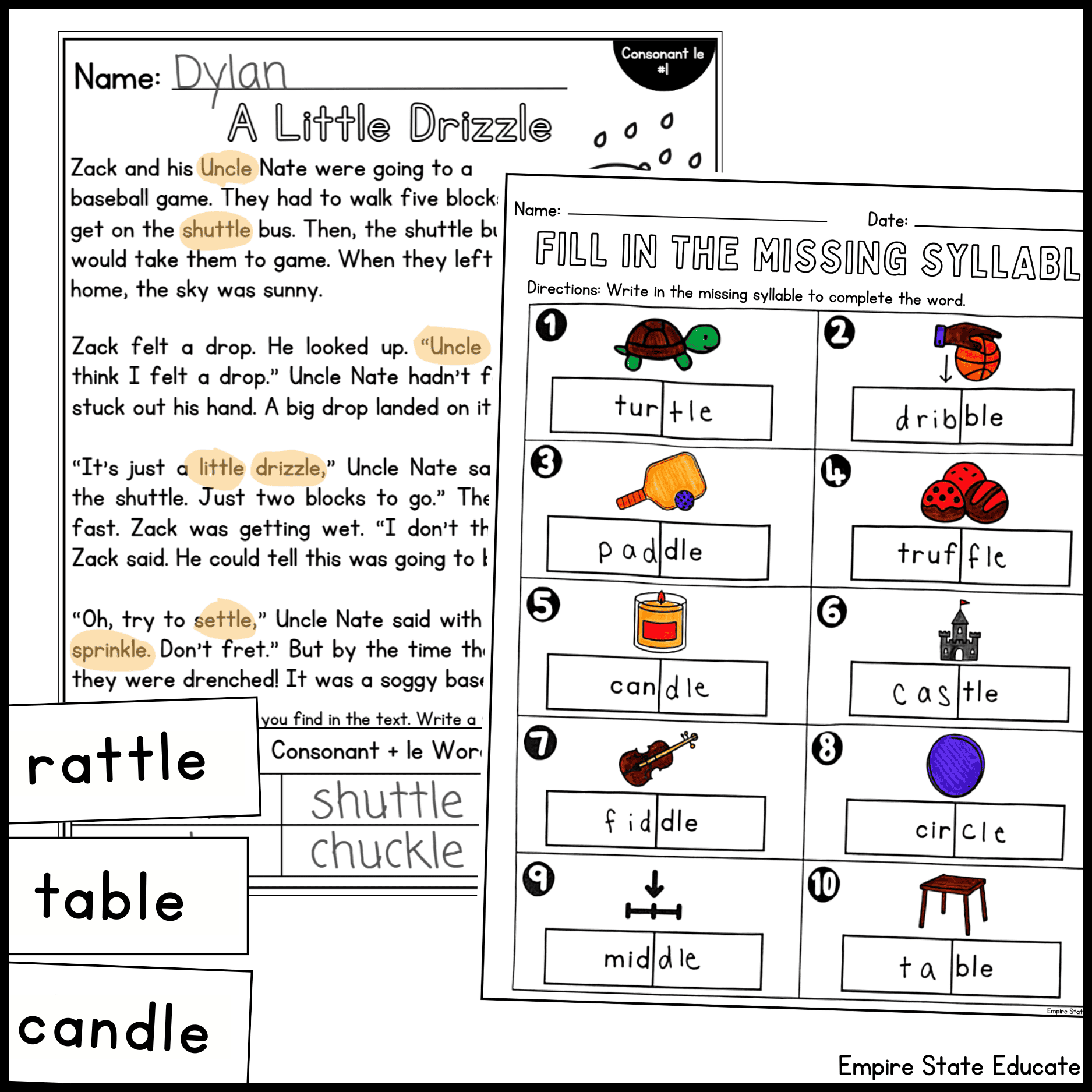

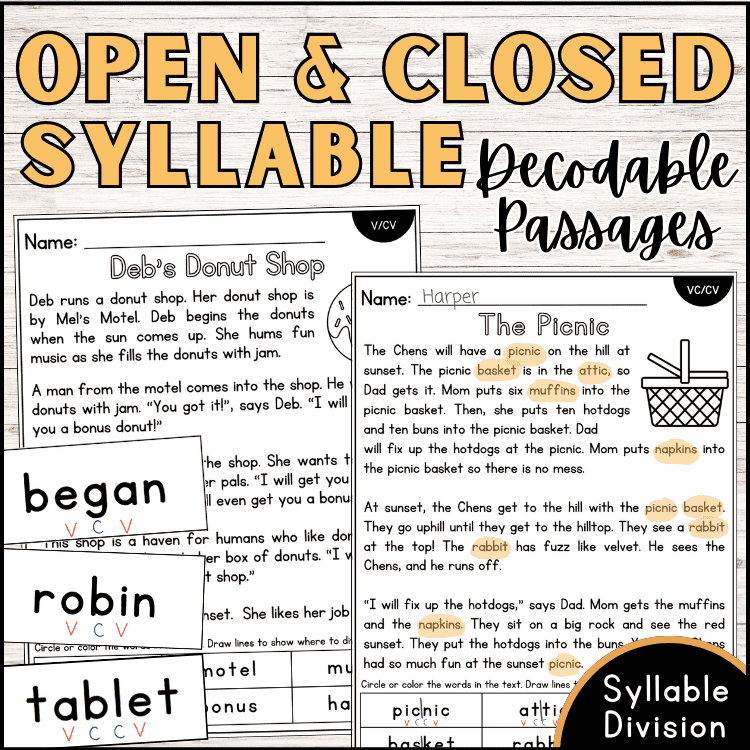
Open syllables and closed syllables are the building blocks of many multisyllabic words. In fact, nearly 75% of all syllables in the English language are open or closed syllables. Yet many adults, including myself, did not learn these terms during their own school experiences. This post will explain what open syllables vs closed syllables are, why they’re important, and how to teach them.
📪What are Closed Syllables?
Closed syllables end in a consonant. The vowel represents its short vowel sound. For example, CVC words are always closed syllables. Here are some more examples:
- glad
- trick
- spot
- shut
📬What are Open Syllables?
Closed syllables end in a vowel. The vowel represents its long vowel sound (it says its name). Here are some examples:
- she
- go
- we
- so
Why Teach Open Syllables vs Closed Syllables?
We encounter open syllables all the time when reading. Here are some fast facts to show just how common they are:
- Long o is spelled with an open syllable 73% of the time (like in focus)
- Long u is spelled with an open syllable 59% of the time (like in music)
- Long a is spelled with an open syllable 45% of the time (like in table)
- Long e is spelled with an open syllable 40% of the time (like in meter)
- Long i is spelled with an open syllable 37% of the time (like in spider)
Explicitly teaching closed and open syllables helps readers decode multisyllabic words.
🕰️When Should You Start Teaching Open Syllables?
A reader may be ready to learn open syllables if they:
✅Know the difference between a consonant and a vowel
✅Know their short and long vowel sounds
✅Have an understanding of what syllables are
Tips for Teaching Open vs Closed Syllables
1. Incorporate Phonemic Awareness
- Play listening games that require students to listen for the vowel sound in a word.
- “What is the last sound you hear in the word go? ”
- “What is the first sound you hear in the word it?”
- Practice sorting words based on short or long vowel sounds.
2. Make it Visual
- Show the difference between open and closed syllables with a visual representation, such as a door or a gate.
- When the door is closed, the vowel is short. When the door is open, the vowel is free to say its name. Practice several examples.

3. Include Nonsense Words
- Including nonsense words will ensure that the reader grasps the concept and is not just recognizing familiar words. You can find a list of nonsense words at the end of this post.
4. Begin with single syllables, then move to 2-syllable words
- Once students have mastered decoding single closed and open syllable words, you can move on to multisyllabic words that contain open and closed syllables. See this post for tips.
Closed & Open Syllables Word List
Open Syllables vs Closed Syllables
Here is a list of words that can be paired together to practice the difference between closed and open syllables. Have students practice switching back and forth and pair with a visual.
- we → web
- she → shed
- so → sock
- no → not
- me→ met
- he → hen
- go → got
Closed Syllable Nonsense Words
- op
- yid
- zat
- dob
- leb
- tum
- pon
- lix
- ig
- gaf
Open Syllable Nonsense Words
- ze
- po
- nu
- ta
- ve
- ro
- de
- si
- ba
- cru
2-Syllable Open & Closed Syllable Words
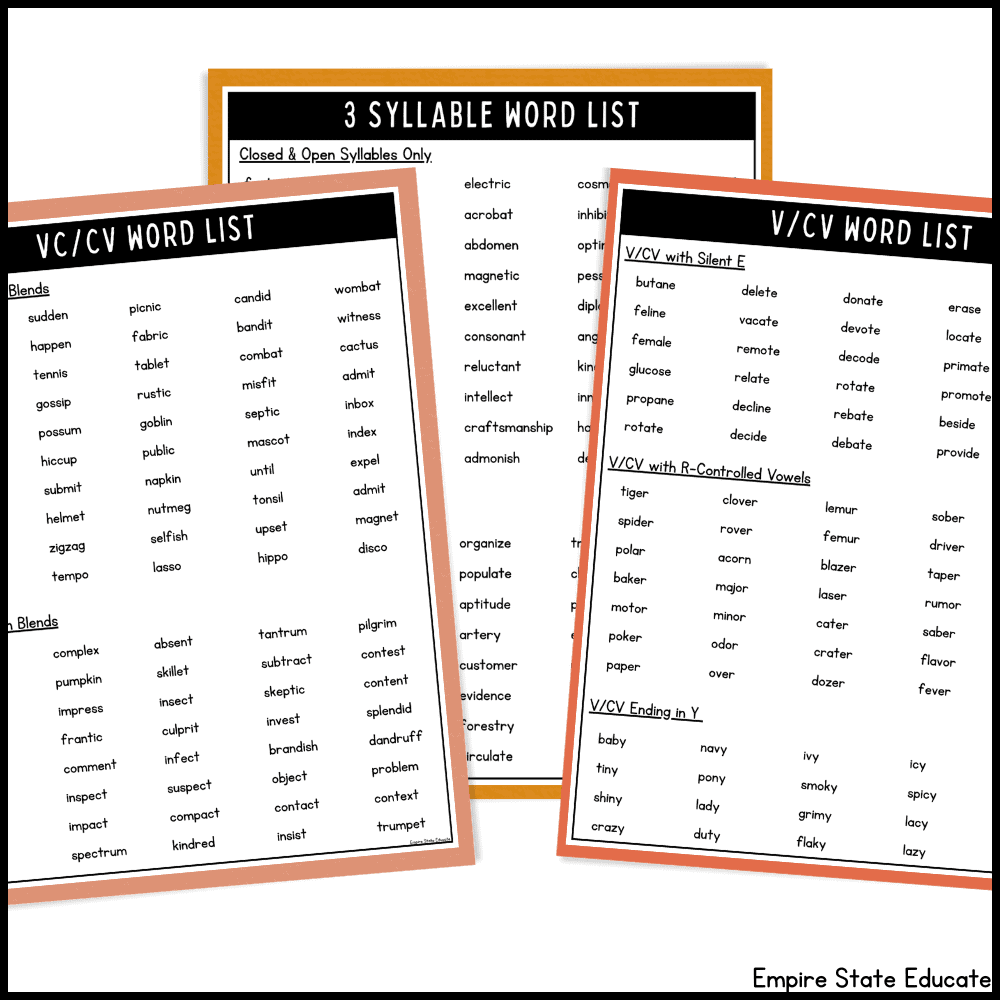
Ready to move on to 2-syllable words? Download my free multisyllabic word lists. You’ll get nine pages of multisyllabic words organized by syllable type and syllable division pattern.