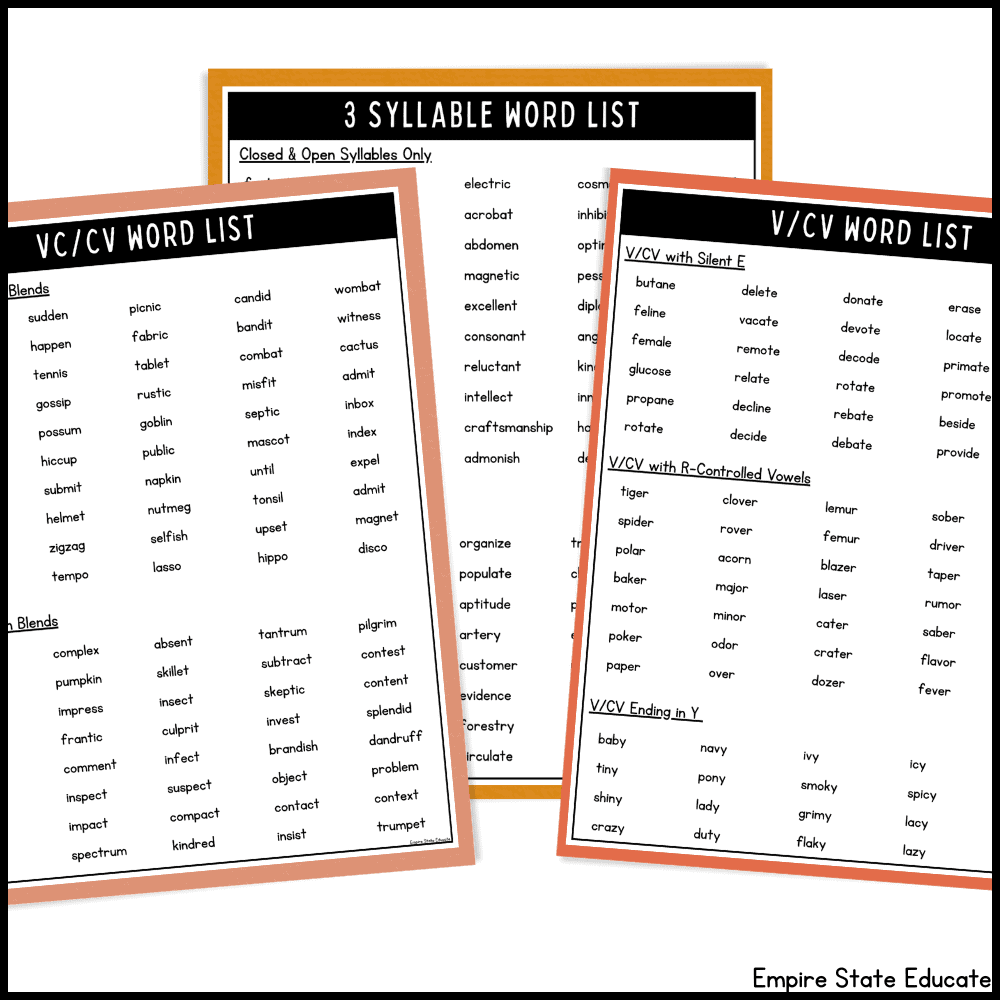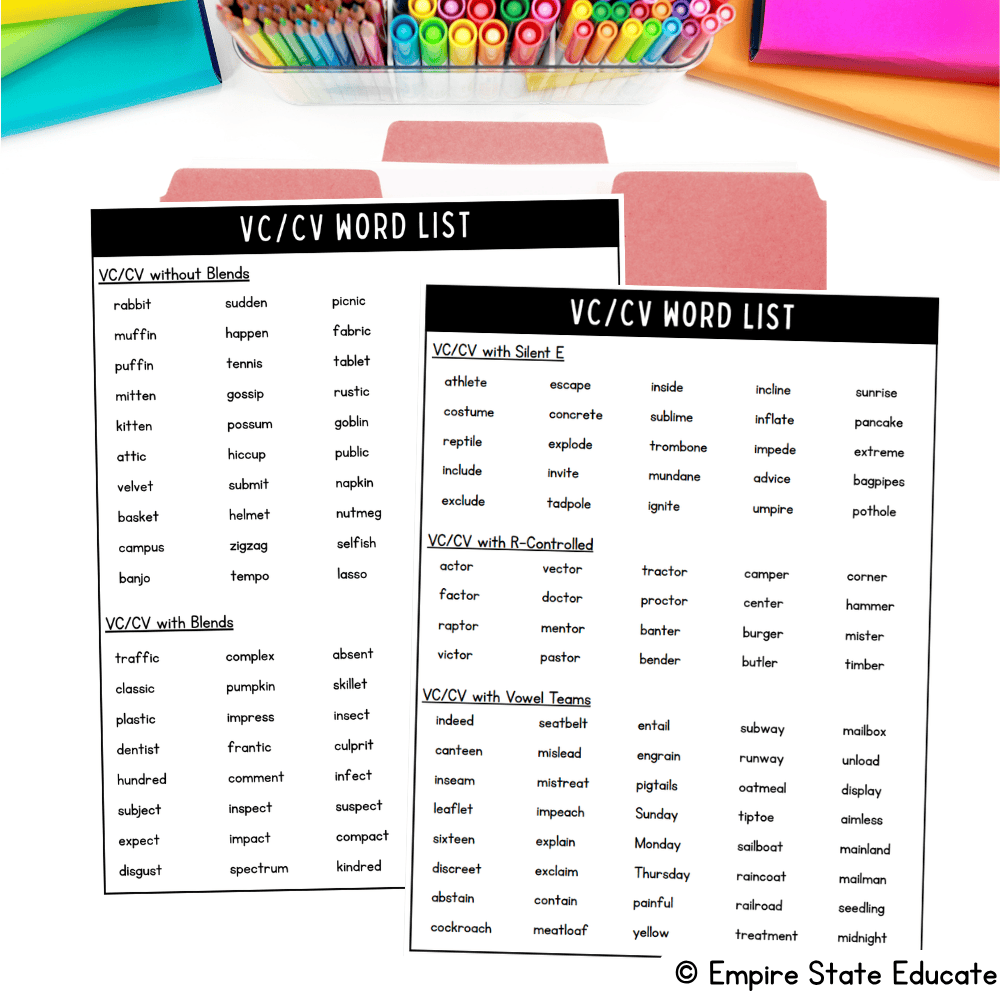

Teaching VCV words with the tiger rule and camel rule is a great way to support students with decoding two-syllable words that have open and closed syllables. In this post, I’ll share my tips for teaching VCV syllable division patterns, plus a free printable PDF list of VCV words you can start using right away!
👉Click here to jump to the free word lists.
What Are VCV Words?
VCV words are 2-syllable words that contain a vowel–consonant–vowel sequence. Depending on the word, we divide either before or after the consonant.
🐯 Tiger or Camel 🐪?
🐯Tiger Rule (V/CV): Divide before the consonant. The first syllable is open, so the vowel is long.
Examples:
- tiger → ti/ger
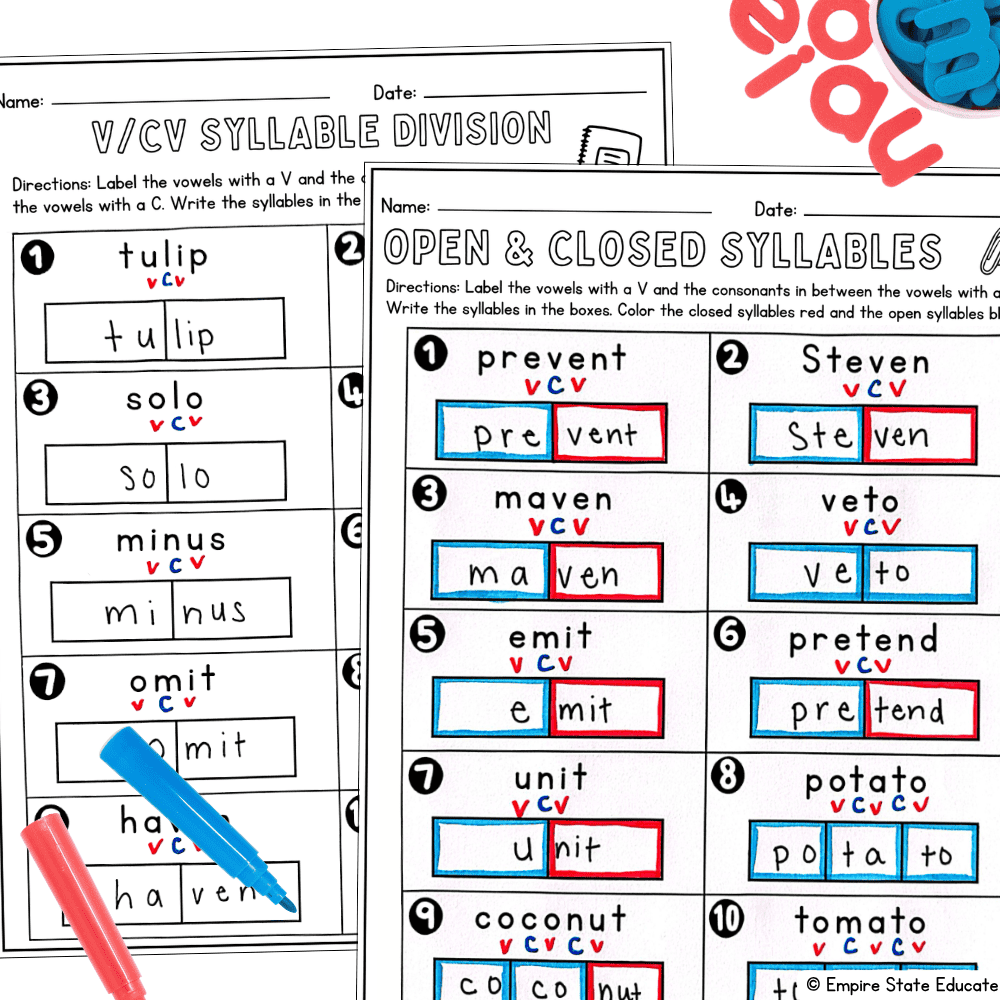
- solo → so/lo
- tulip → tu/lip
🐪Camel Rule (VC/V): Divide after the consonant. The first syllable is closed, so the vowel is short.
Examples:
- camel → cam/el
- visit → vis/it
- exit → ex/it
These words can be tricky because there are two ways to divide them. Teach one pattern at a time, and don’t mix them until students are comfortable with both.V/CV syllable division is more common than VC/V, so I recommend having students try that first. If the word does not make sense, have them try VC/V. Building vocabulary matters here! If a student has never heard the word they are decoding, it will be more difficult to decide which version makes sense.
When Should You Start Teaching VCV Syllable Division?
A reader may be ready for VCV words if they can:
✅ Accurately decode VCCV (rabbit rule) words
✅ Decode open vs closed syllables
✅ Divide spoken words into syllables
Tips for Teaching VCV Words
Incorporate Phonological Awareness: Have students practice manipulating syllables orally first:
🗨️ “Say robot. Now say robot, but don’t say bot.”
🗨️ “Say robin. Now say robin, but don’t say rob.”
Draw Attention to the Vowels: Teach students that every syllable has a vowel. Have them label, circle, or highlight the vowels in red.
Make it Hands-On: When you are first practicing, give students word cards and allow them to physically cut or tear the word to show how to divide it into syllables.
VCV Word Activities

To master VCV words, students need more than just syllable division practice. They also need to practice reading these words in connected text, spelling them, and using them in context. Here are some activity ideas:
- Read decodable passages with VCV words
- Match syllables to form VCV words
- Fill in the missing syllable
- Spell both syllables, then put them together
- Fill in missing VCV words in sentences to build vocabulary
List of Beginner VCV Words📋
Tiger Rule (V/CV)
- robot → ro/bot
- donut→ do/nut
- zero → ze/ro
- even → e/ven
- music → mu/sic
- humid → hu/mid
- student → stu/dent
- recent → re/cent
- silent → si/lent
Camel Rule (VC/V)
- limit → lim/it
- cabin → cab/in
- panic → pan/ic
- robin → rob/in
- medic→ med/ic
- comic→ com/ic
- rapid→ rap/id
- credit → cred/it
- vanish → van/ish
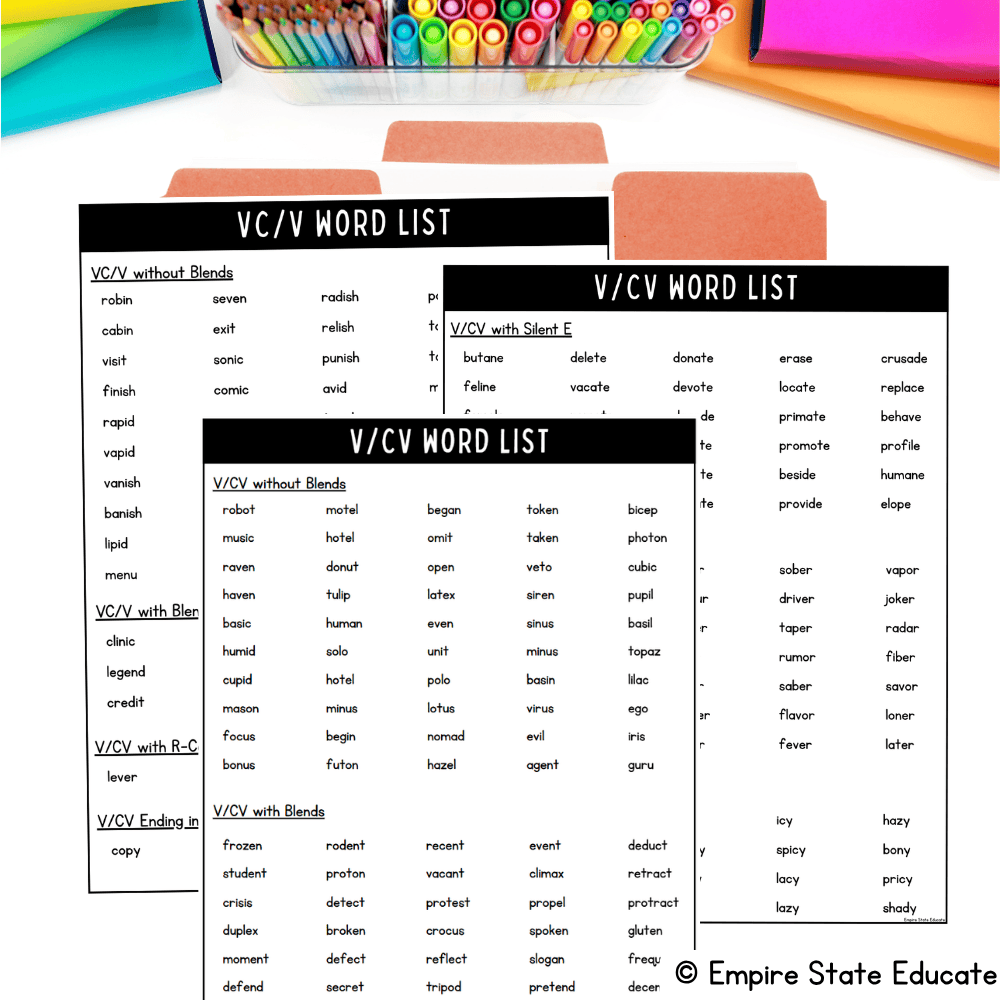
👉Get the Full List of VCV Words (Free PDF)
Free Multisyllabic Word Lists
Get a complete list of tiger rule and camel rule VCV words organized by syllable type – plus lists for more syllable-division patterns. Print this out and use it for easy practice!
More Syllable Division Resources
Syllable Division Worksheets:
- Tiger Rule V/CV Worksheets
- Camel Rule VC/V Worksheets
- Open & Closed Syllables Decodable Passages
- Syllable Division Worksheets for Holidays & Seasons
More Blog Posts:
Pin This Post For Later