
Why do words like kind, gold, and wild have a long vowel sound? In this post, we’ll talk about closed syllable exceptions and how to teach them. Read until the end to download your FREE closed syllable exception word list and sound cards!
What are closed syllable exceptions?
Closed syllable exceptions are closed-syllable words that have a long vowel sound instead of a short vowel sound. (If you’re not familiar with closed and open syllables, click here to review them before reading on.)
In Old English, many of these words had a silent e to denote the long vowel sound. Over time, the spelling changed, but the long vowel sound stuck.
Closed syllable exceptions include words with the spelling patterns -ind, -old, -ost, -ild, and -olt. You may hear them called “kind old ghost words.” Sometimes they are also called short vowel exceptions.
Here are some examples:
| -ind | -old | -ost | -ild | -olt |
| kind mind find rewind | old cold gold mold | most post ghost host | wild child mild wildlife | colt bolt jolt revolt |
⏩Note that cost and lost are not included because they have a short vowel sound – exceptions to the exception!
When Should You Start Teaching Closed Syllable Exceptions?
Closed syllable exceptions can be confusing at first, so I don’t recommend teaching them until students have mastered closed and open syllables. I would also wait until after students have learned digraphs, blends, silent e, and glued sounds.
How to Teach Closed Syllable Exceptions
I teach closed syllable exception patterns as a unit using sound cards with visuals. You can get them for free at the end of this post! Model exactly how you want students to say each sound. For example, say “o-l-d, old” and have students repeat.

I like to begin with words that have the -old pattern because this is the most common closed syllable exception. Plus, it’s easy to start with the three-letter word “old” and build from there.
Once students are comfortable with this pattern, introduce words with -ind. This is the second most common pattern. You may want to spend a few days just working with these two patterns.
Finally, introduce the other patterns. These are slightly less common but still important to know.
Activities for Teaching Closed Syllable Exceptions
Word Sorts
Sort words into families based on their pattern. You can use word cards or cut and glue worksheets.

Word Mapping/Spelling
Practice spelling closed syllable exception words by tapping out the sounds.

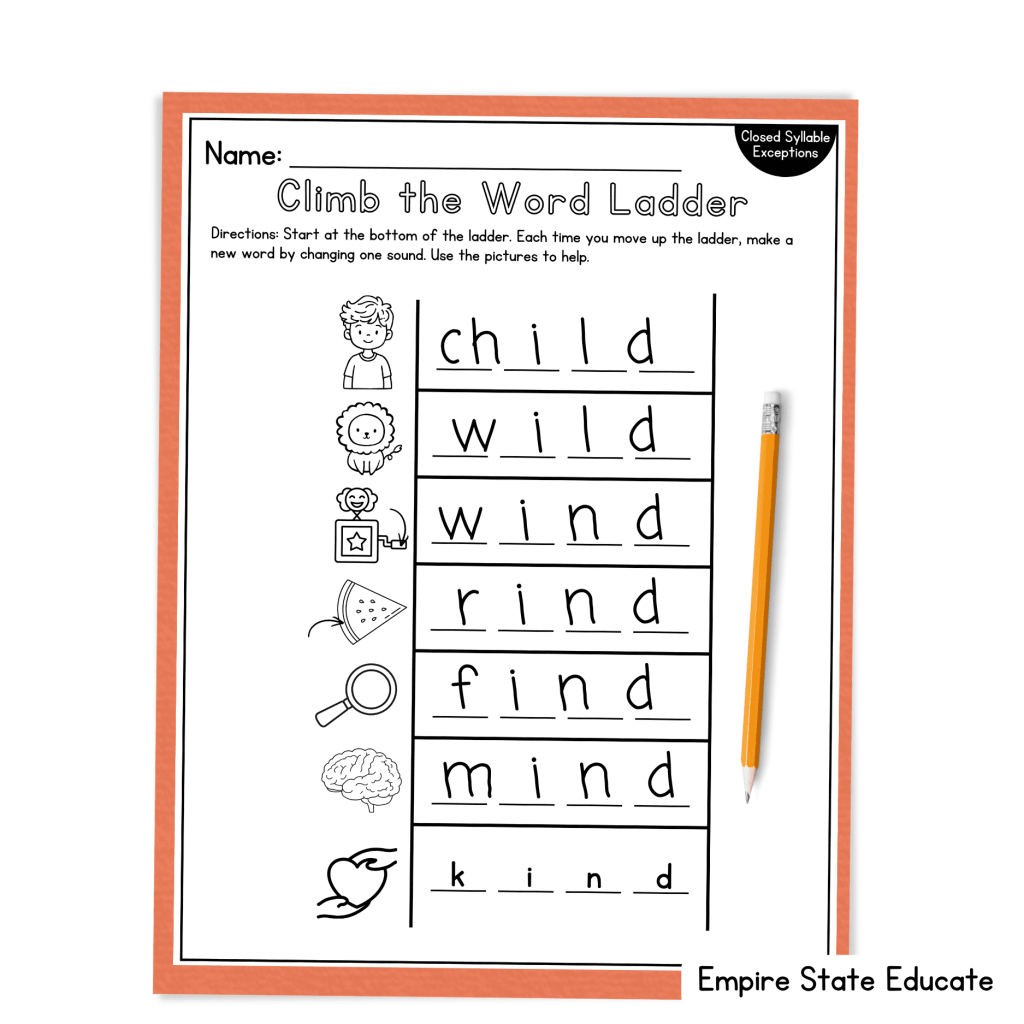
Word Chains
Make new words by changing one sound at a time. This can be done with magnetic letters, letter tiles, or dry-erase boards.
Example: find → kind → mind → wind → wild → child
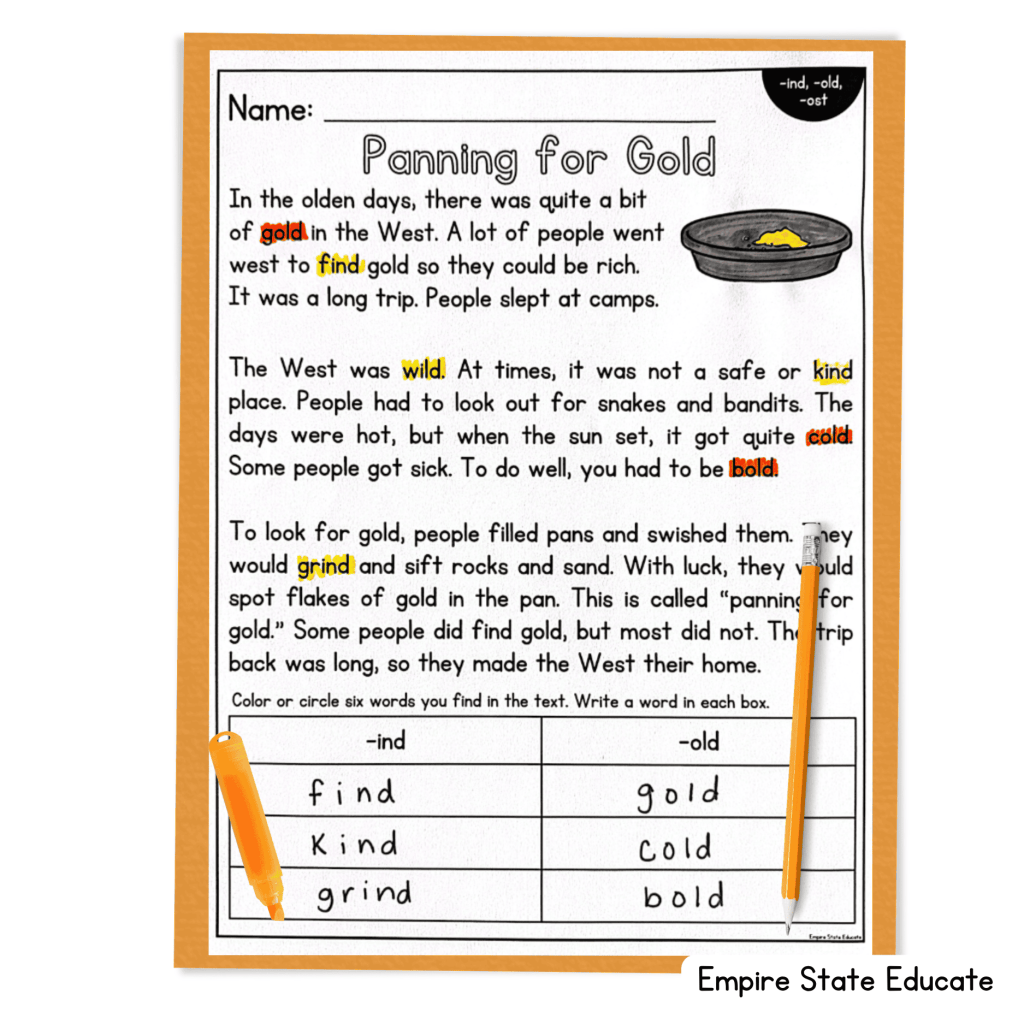
Decodable Texts
Practice reading kind old ghost words in context with decodable text. Find and circle words with closed syllable exception patterns.
Need to save time?
You can get every activity you see in this post (plus more!) in my TPT store. If you grab the worksheets and the decodable passages, you’ll have everything you need to teach this skill!
🥳Free Closed Syllable Exceptions Word List
I’ve created a free printable PDF list of closed syllable exception words to make your planning easier. It also includes these adorable printable sound cards in color or black and white. Enjoy!