If you’re overwhelmed by planning reading lessons every week, it’s time to start working smarter. My favorite way to do this? Use one decodable text for multiple lessons.
In this post, you’ll learn how to plan up to five days of reading lessons with just one decodable reading passage. You’ll be able to use this routine with just about any decodable text, so it’s easy to keep things consistent.
I’ll show you how to use a decodable passage to cover phonics, fluency, and reading comprehension. Use this method to plan small groups, reading intervention lessons, or tutoring. It also works for homeschooling families.
You’ll also get six FREE decodable passages to try this method with!
No time to read now? Pin this post for later.
In this post:
Why Spend Multiple Days on One Decodable Text?
Before we dive in, you might be wondering why you’d want to spend multiple days on one decodable text. Aside from the fact that it makes planning easier for you, there are a few reasons:
- Research shows that repeated readings of the same text build fluency
- It allows students to deepen their understanding of the text or topic
- It allows you to cover multiple skills without having to rush
Keep in mind that in order to do this effectively, you’ll need to choose a high-quality decodable.
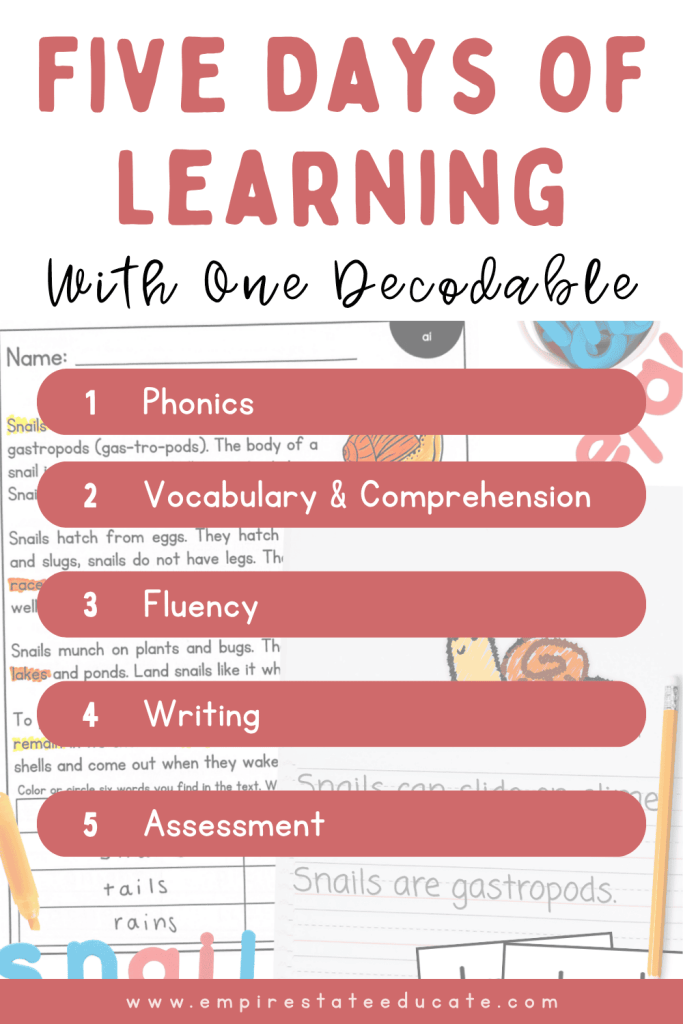
The Five-Day Decodable Text Lesson Plan
Day 1: Phonics
First, teach or review the target phonics skill.
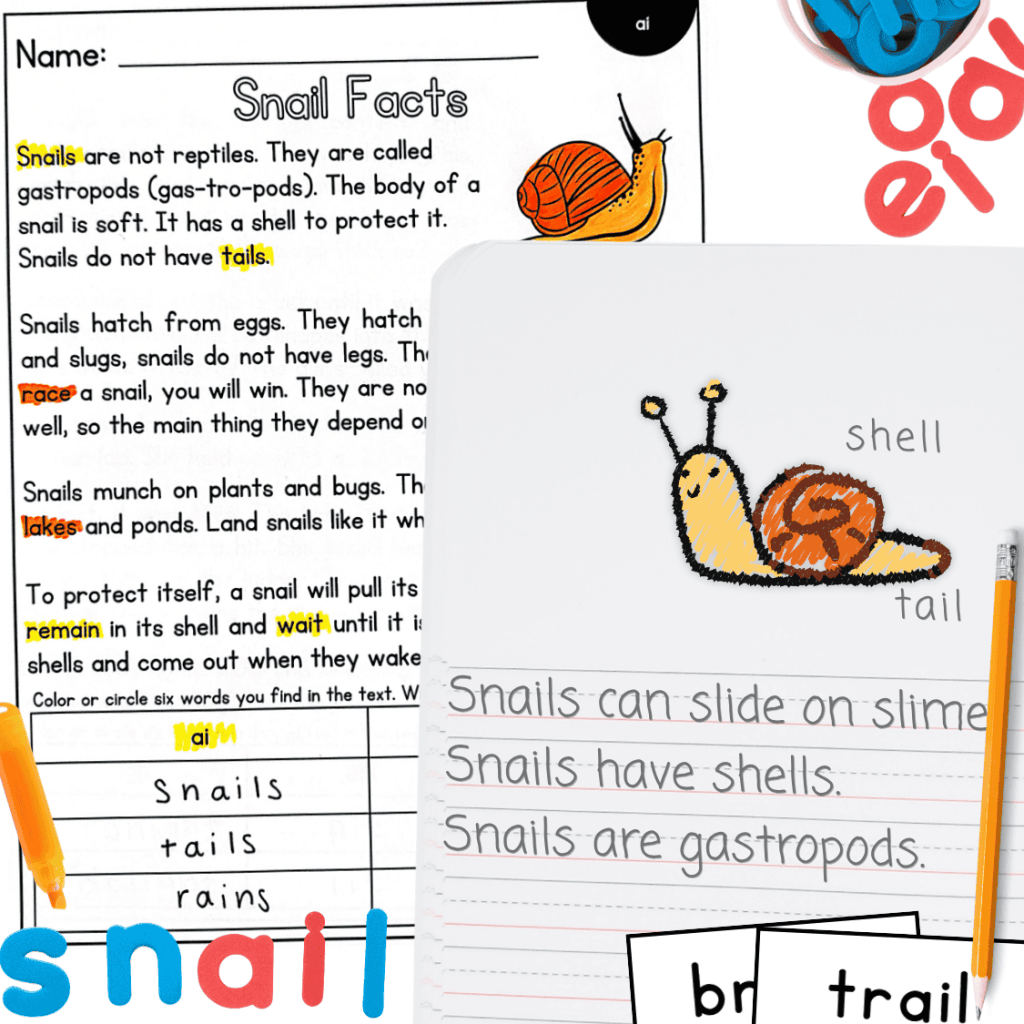
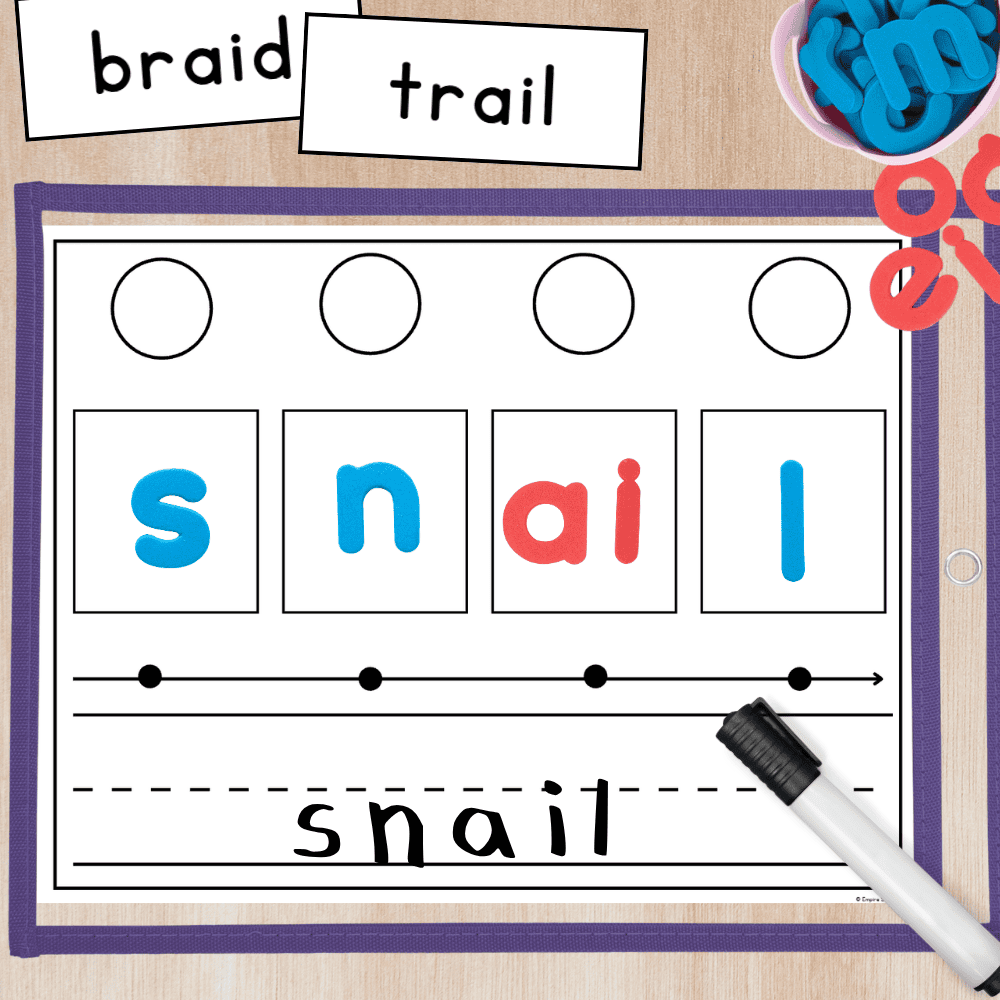
In this example, the target skill is the vowel team ai. First, I’ll explicitly teach that “ai” spells /ā/. Then, we’ll practice by:
- Decoding words with the phonics skill (using word cards, a word list, or slides)
- Encoding (spelling) words with the phonics skill (using sound boxes or letter tiles)
I like to choose words that will appear in the passage to give students multiple exposures to them. I also like to practice any particularly tricky words they’ll encounter in the text.
On the first read of the passage, the focus is decoding. I like to have students highlight words with the target spelling pattern. For students who need more support, I may have them echo read (I read a sentence, then they read it).

After reading the passage, I like to bring it back to the phonics skill. I’ll have students find words with the target spelling pattern(s) and record them in the chart.
Day 2: Vocabulary and Comprehension
On day two, we continue practicing the phonics skill while beginning to focus more on comprehension. First, we do some more decoding practice with the word cards and spelling practice with a word chain. Then, I teach one vocabulary word from the passage using this routine:
- “Pound and sound” the word (pound the syllables with a fist, tap the sounds with fingers)
- Give a student-friendly definition and use the word in a sentence
- Discuss examples and non-examples
- Check understanding by having students use the word in a sentence
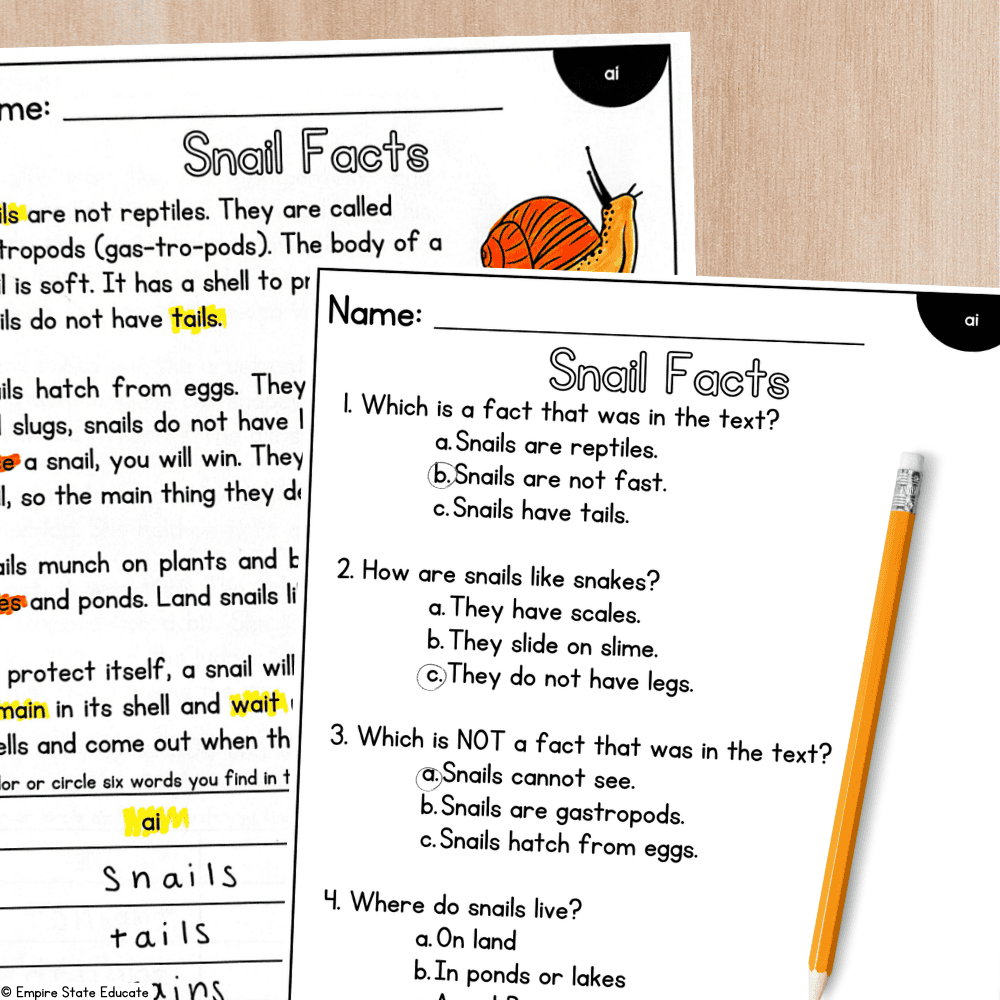
Students reread the same decodable passage. This time, they’ll be able to focus less on decoding and more on understanding the text. I recommend giving them a specific purpose for reading. For example, if they’re reading a nonfiction text, you might have them underline three important facts. If they’re reading a fiction text, you might ask them to think about the main problem the character had.
After reading, we focus on comprehension. This can look like:
- Answering comprehension questions
- Discussing the passage (come back to the purpose for reading)
- Reviewing the vocabulary word
Day 3: Fluency
On day three, we’ll start by reviewing the phonics skill. We’ll also review the vocabulary word and, if needed, learn a second one, repeating the same routine as before.
The third reading of the passage will focus on fluency. Depending on the week, this may include:
- Echo reading (and really modeling proper phrasing and expression)
- Choral reading (we all read aloud together)
- Partner reading
- A combination of the three
Since this day does not take as much time as other days, we might also be finishing comprehension activities from yesterday or doing another comprehension activity.
Day 4: Writing About Reading
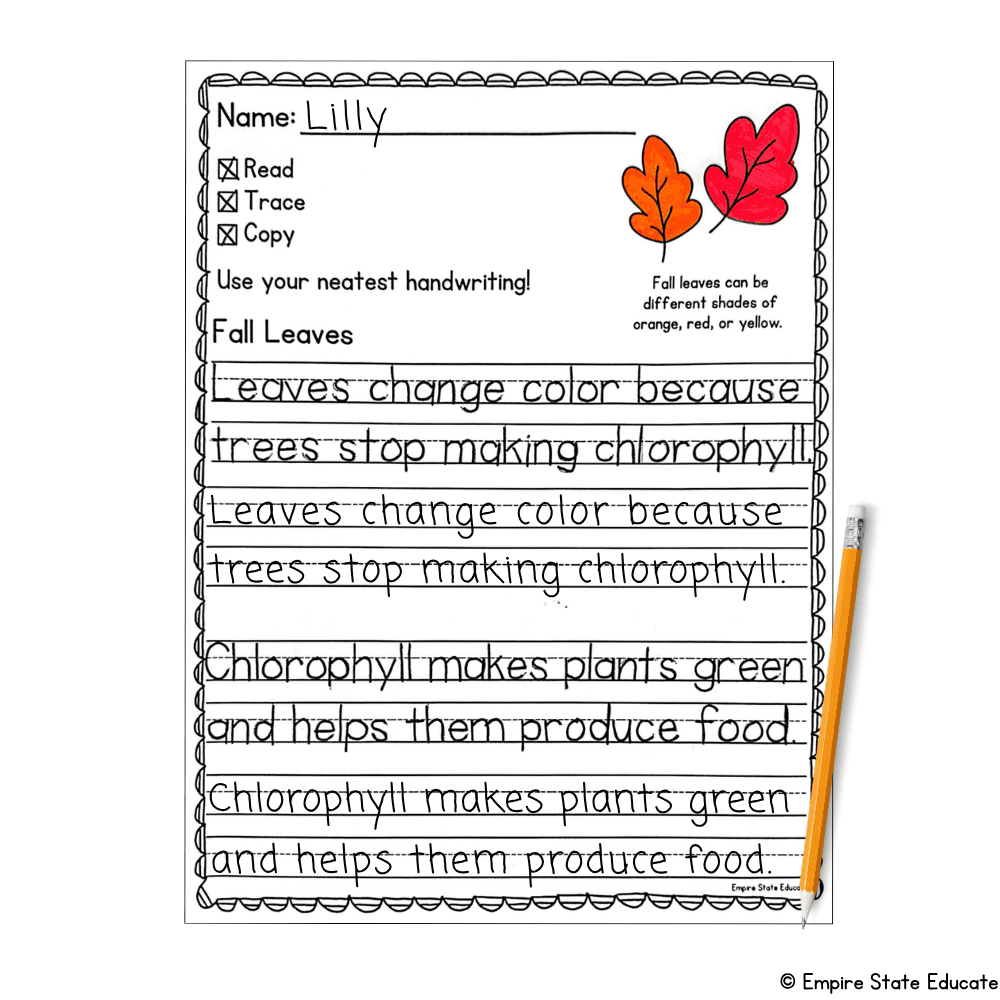
Day four is about digging deeper, and one of the best ways to do that is by writing about reading. This step is often overlooked, but it’s important. Did you know research shows that writing improves reading comprehension?
The writing activity depends on the students and the text, but here are some options:
- “Because, but, so” sentences
- “Can, have, are” sentences
- Another sentence frame
- Paragraph writing

Day 5: Assess and Monitor Progress
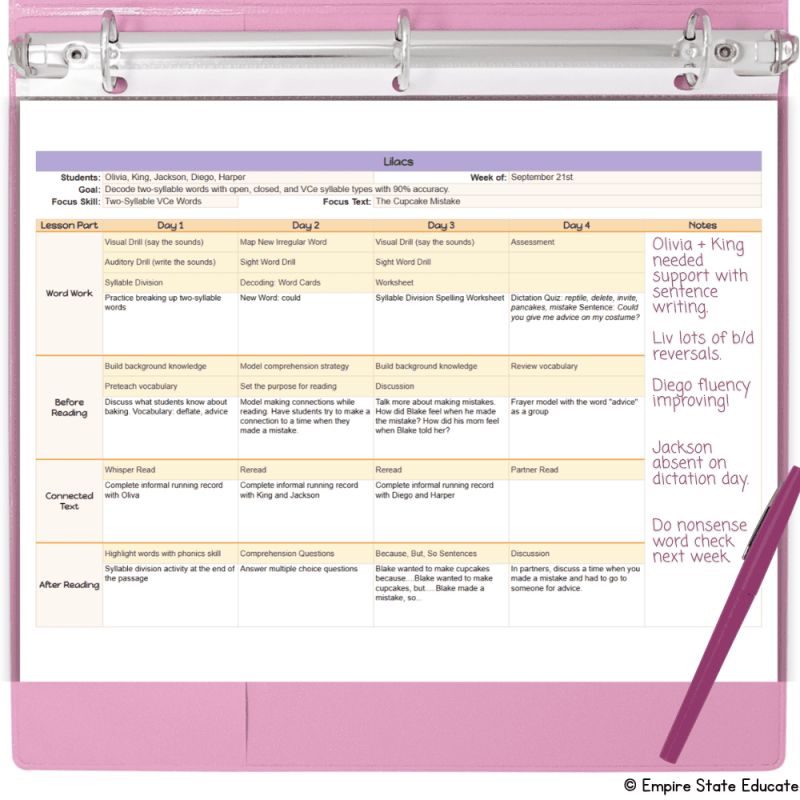
Day five is for wrapping things up and assessing students’ progress. (If you don’t have five days, work a quick assessment into a different day.) Depending on the student(s) and their goal, this may look like:
- Nonsense word fluency check
- A spelling/dictation quiz
- A running record/ORF
You can learn more about planning small groups and monitoring student progress in this blog post.
👉FREE Decodable Texts with Comprehension Questions

Want to try this method yourself? Download Snail Facts and five other decodable passages for free. Comprehension questions are included!
📍Pin This Post For Later

Research Sources
Graham, S., & Hebert, M. (2010). Writing to read: Evidence for how writing can improve reading. Alliance for Excellent Education. https://media.carnegie.org/filer_public/9d/e2/9de20604-a055-42da-bc00-77da949b29d7/ccny_report_2010_writing.pdf
Therrien, W. J. (2004). Fluency and comprehension gains as a result of repeated reading: A meta-analysis. Remedial and Special Education, 25(4), 252–261. https://doi.org/10.1177/07419325040250040801