If you’ve ever looked up from your small-group table to find three students off-task, two students arguing, and another student waiting to ask you a question, you know literacy centers can feel more like organized chaos than productive learning time.
Small-group instruction is meant to provide your students with quality, individualized support. But without solid classroom management strategies and routines, it just ends up being frustrating and ineffective.
In this post, we’re talking about how to set up second-grade small groups and literacy centers for success, starting from the first week of school. I’m sharing classroom management ideas, step-by-step routines, and easy activities that will help your literacy block run smoothly so you can focus on teaching!
How to Structure Your Literacy Centers
When you think of literacy centers, you may picture students switching stations every 15 minutes. I loved rotations when I taught kindergarten summer school, but I didn’t use them in my second or third-grade classrooms.
✅Rotations might make sense for you if:
- Students will be working collaboratively on every center
- You have an aide or teaching assistant who can help with transitions
- Your centers are very hands-on and require shared materials
❌You might want to ditch rotations if:
- Students will be working mostly independently
- You don’t want to manage frequent transitions
- You want more flexibility
If you don’t end up using rotations, one option is to display a daily activity slide. I like having two “must-dos” and one “may-do” for early finishers.
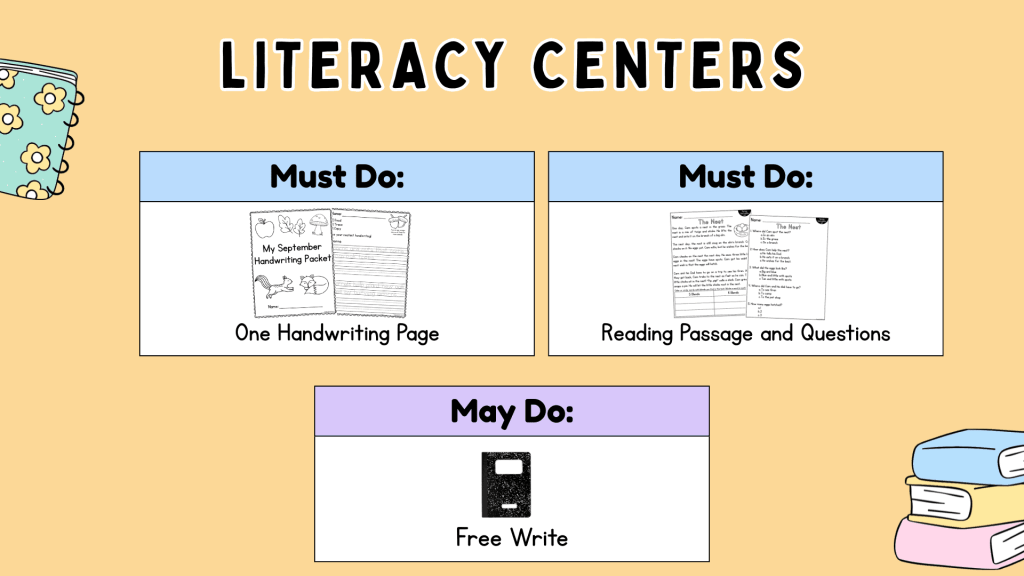
The best part of this method is that it allows students to work at their own pace. Some students may need twenty minutes for one center, while others only need ten. With this approach, no one is waiting to rotate or rushing to finish.
Another benefit is that it gives you more flexibility with small groups. You may find that one group only needs a five-minute check-in, while another needs a full fifteen-minute lesson. You can base this on student needs rather than a schedule.
⭐Learn more about creating a flexible small group schedule.
Do this before you ever pull a reading group.
One of the biggest mistakes I made when introducing centers was trying to do too much, too soon. Now, there’s no way I’d try to meet with small groups during the first few weeks of school!
Before you can even think about small group instruction, your class needs to know exactly what to do when they aren’t meeting with you.
Here’s a step-by-step routine for introducing this at the beginning of the school year. ⬇️
Step 1: Brainstorm shared expectations.
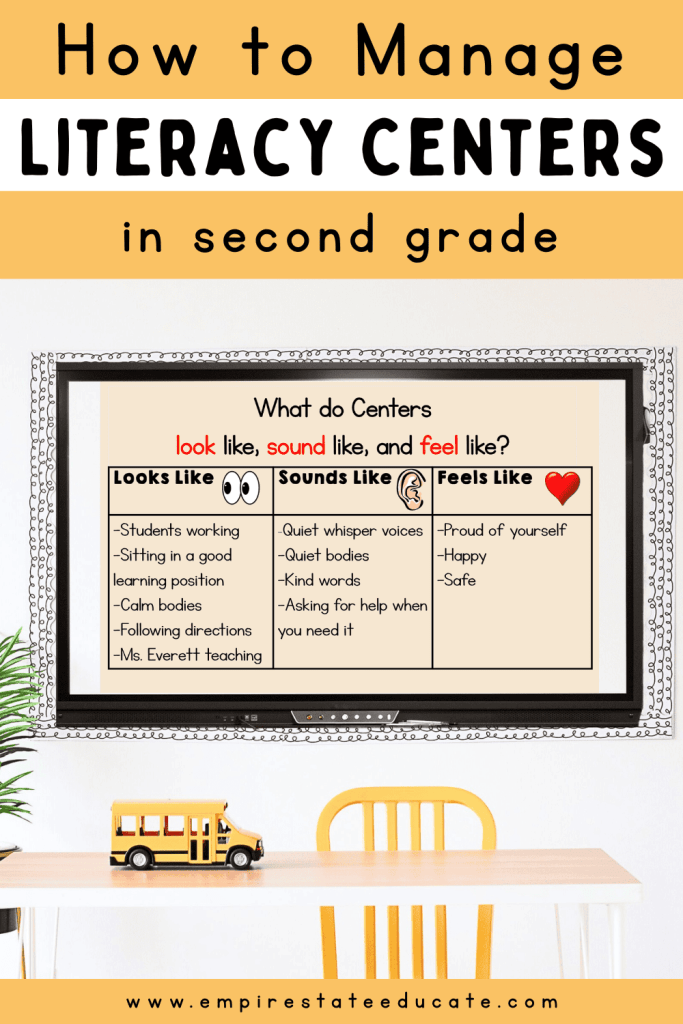
This idea from my mentor teacher stuck with me year after year. To start, sit your whole class down on the carpet and ask them to think about how literacy centers (or stations, independent work, etc.) should look, sound, and feel.
This activity builds a sense of classroom community and creates more buy-in from your students. Here are some things to consider before you start:
- What should the noise level be?
- Are students expected to work independently, or can they work together?
- Will students be working at their desks, using flexible seating, or rotating between stations?
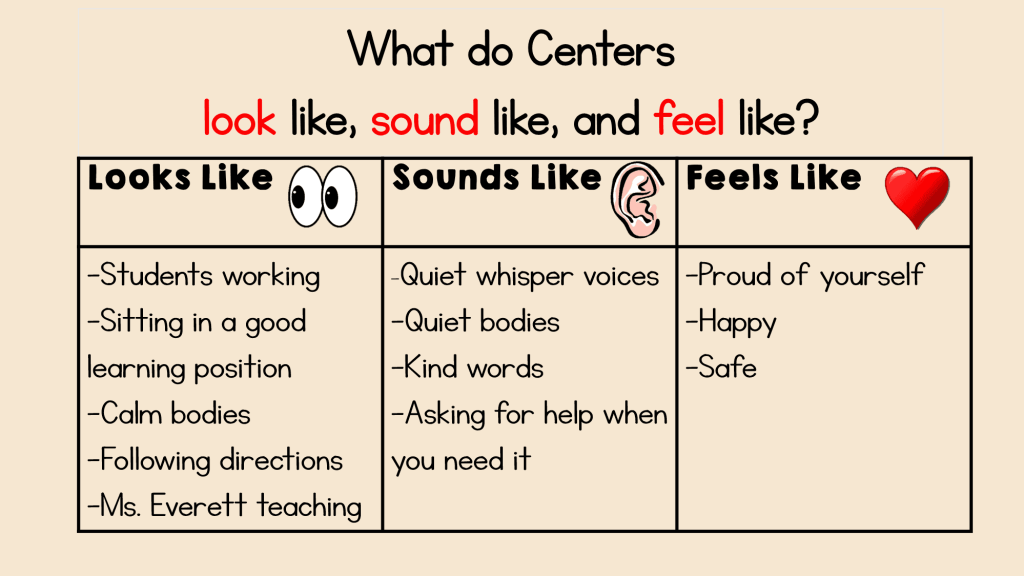
If your students come up with ideas that are silly or don’t match your expectations, that’s okay! You can gently guide the conversation.😉
Step 2: Model, model, model.
Once you’ve discussed shared expectations, slowly model one center activity at a time. (And I mean painfully slowly.) Never assume that your students know how to do something simply because they’re in second grade.
During the first week of school, we do literacy centers as a whole group. I explicitly model every step, from putting your name on the paper to turning it in.
If students will be partner reading or participating in other collaborative activities during centers, you need to model those, too!
I recommend practicing no more than 1-2 activities each day.
Step 3: Run a “dress rehearsal.”
Once you’ve explicitly modeled and practiced each activity as a class, have students practice centers independently while you’re free to monitor and support. Plan to do this for a week, gradually reducing your level of support each day.
By the end of the week, students should be able to complete centers without needing your help. This includes locating materials, handing them in, and following expectations while working. If they’re not there yet, you’re not ready for small groups!
How to Reduce Interruptions During Small Group Instruction
What happens when you start small groups, and a student has a question?
First, set the expectations ahead of time. I tell my students they can only interrupt my teaching in an emergency (someone is hurt or could get hurt). For bathroom requests, we used a simple hand signal and nod.
You can also teach students the “ask three before me” method. If they have a question about the directions or where to find something, they ask up to three classmates first. I’ve personally found that this can lead to more distractions, so it’s better to reduce the need for questions during this time.
The best way to prevent interruptions is to set students up for success from the start by launching centers the right way and choosing the right activities.
Choosing the Right Literacy Center Activities
Here’s the number one rule 👉 Nothing new during centers.
You can eliminate most interruptions during small groups by using activities that can be done from start to finish without your help. All centers should review previous skills and follow a familiar format.
One easy way to accomplish this is to use yearlong bundles of activities that cover a range of skills with a consistent structure. This also saves a ton of planning time.
The best activities for literacy centers are simple and focus on foundational skills.
Examples:
- Handwriting practice pages
- Decodable reading passage with comprehension questions
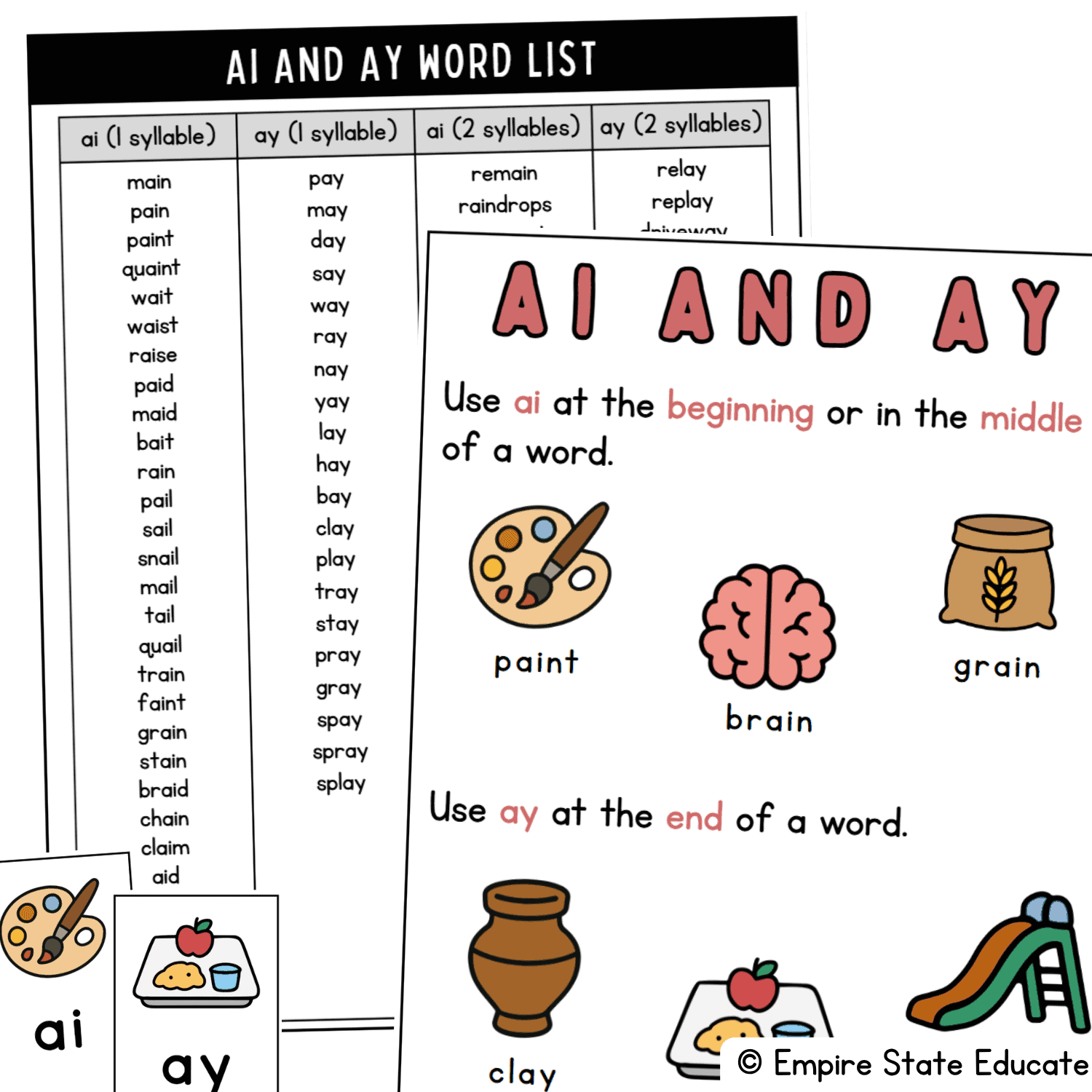
- Phonics worksheet reviewing a concept practiced in a small group
- Fluency activity (like partner reading) with a familiar passage

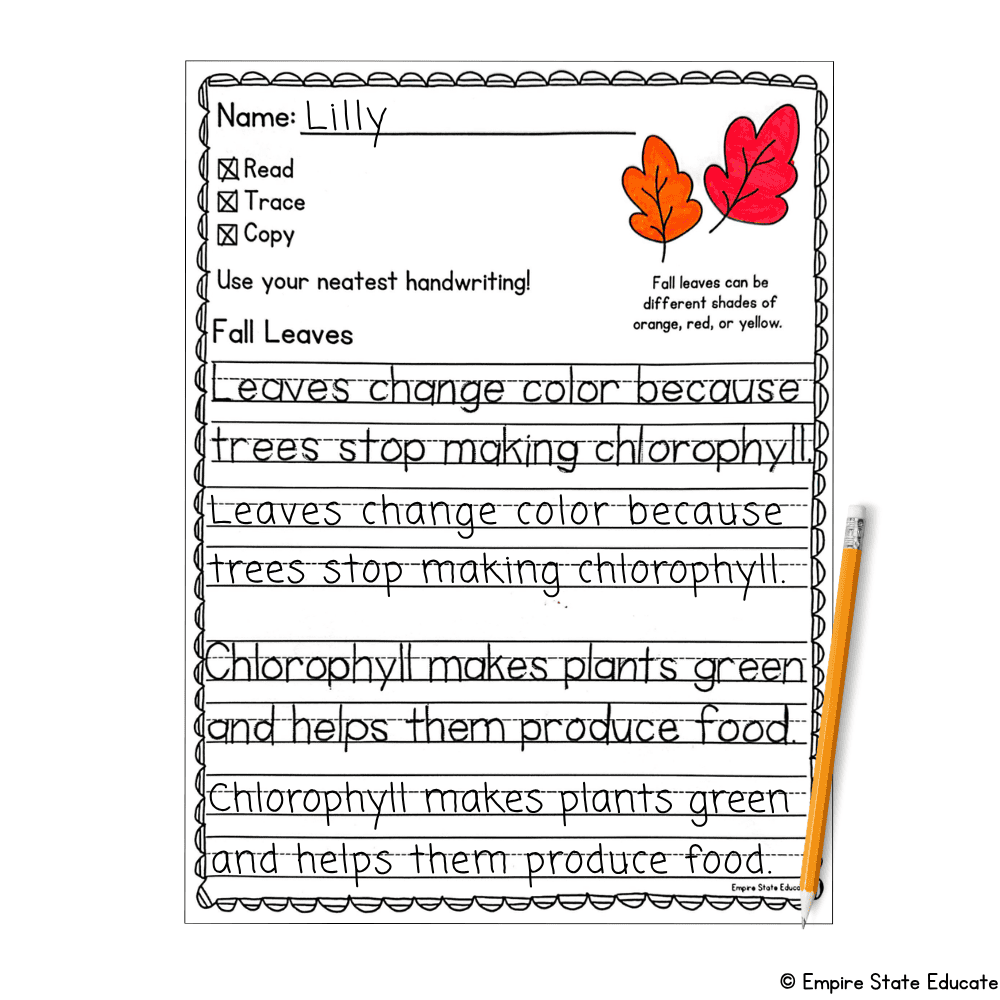
One quick note! 🙂
I know a lot of teachers don’t love relying on worksheets, but remember… independent work is not for new learning. You need to be able to give your best to your small groups, and your students need tasks they can complete successfully while you do that.
With kids spending more and more time on screens, there are real benefits to good-old-fashioned worksheets! They provide practice with fine motor skills, letter formation, and spelling. Studies even show that reading comprehension improves when using print materials. (Source)
Classroom Management at the Small Group Table
Once literacy centers are running smoothly, you’re ready to pull groups! Classroom management is just as important at your small group table as it is everywhere else.
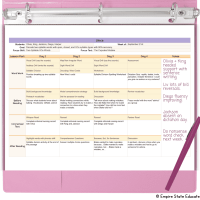
⭐Learn how to group students and create your small group schedule in this post.
Here are my tips for setting your small groups up for success. ⬇️
Set Clear Expectations
Students often feel more comfortable in small groups, which can lead to disruptions if expectations are unclear. Be sure to model and practice:
- How to come to the table (walking, quietly)
- Sitting at the small group table with a calm body
- Eyes and ears on the teacher
- Taking turns talking
- How to leave the table (cleaning up, pushing in chair, etc.)
💡I have students raise their hands during small groups at first. Eventually, I’ll remove this expectation if they can handle it.
Manage Materials
Set up materials so you have everything you’ll need for each group. I had a rolling cart for all of my general small-group supplies (whiteboards, manipulatives, etc.) and a large bookshelf with bins for each group’s activities.
💡Whenever you use a new manipulative, give students one minute to explore and play! If it’s letter tiles, let them build their own words. If it’s dry-erase boards, let them draw. This lets them get their curiosity out before you start teaching.

Tighten Transitions
Once you’ve practiced a few times, switching groups should only take a minute or two. To make transitions smooth:
- Give the group that’s leaving a moment to get settled before calling the next group. This also gives you time to get materials ready.
- Have a quick fluency warm-up ready to go when needed. I had gallon bags with previously read texts for each student. As they sat down, they chose one to reread while everyone got situated.
💡I don’t display a timer for small group rotations. I’ve found that students watch it and try to race to the table when it’s their turn. Plus, sometimes you end up needing more time than you think!
Keeping Things Running Smoothly All Year
You’ll probably need to revisit these expectations throughout the school year, especially after long breaks. If it feels like things are crumbling, don’t be afraid to pause and reteach. That’s a normal part of classroom management.
Building these routines takes patience, but it’s always worth it! If you set clear expectations, model, practice, and choose the right activities, you’ll be able to focus on supporting the students at your table instead of managing the rest of your class.
Need to save time? Stock up on a few quality literacy center activities now. Here are two great options you can use all year. ⬇️
📚Decodable Passage Bundle: Full-page passages and comprehension questions for every phonics skill, great for both centers and small groups. Grab a free sample below!
✏️Monthly Handwriting Packet Bundle: Handwriting practice that builds knowledge with fun monthly topics. With 20 pages per packet, you could make this a daily center.
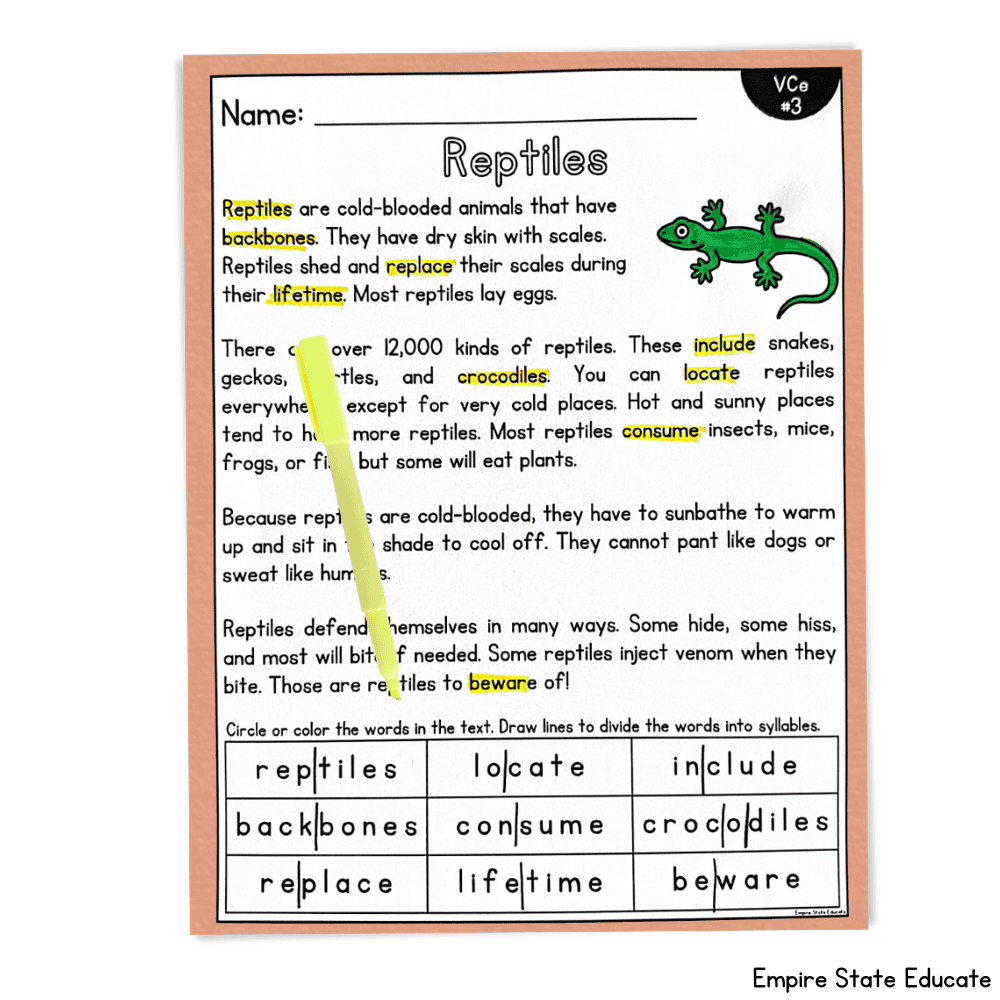
Free Decodable Passages
Download a free sample of my decodable passages – perfect for building fluency and comprehension with text students can actually read! Ready to print for centers or small groups!
Pin This Post for Later