I couldn’t even tell you how many structured literacy small group lesson-planning templates and methods I’ve tried over the years. When I first started teaching second grade, I was planning traditional guided reading groups. Those didn’t work because there wasn’t enough focus on phonics. Then, I purchased a science of reading lesson template, but that gave me the opposite problem – too much focus on phonics and not enough on connected text and comprehension.
After years of trial and error, I figured out how to plan small reading groups that devote time to BOTH word-reading and comprehension. In this post, I’m sharing my easy 4-step method for planning structured literacy small group lessons, a real-life example, and a lesson planning template that will cut your planning time in half.
In this post:
Step 1: Goal, Skill Focus, and Text
Every small reading group needs a specific, measurable goal that’s based on data. Goals are not the same as learning targets or lesson objectives. You don’t need a different goal every day. The goal stays the same all week, and possibly for several weeks, until students have met it!
Examples of small group reading goals:
- Students will be able to decode words with vowel teams with 90% accuracy.
- Students will be able to read and spell CVCE words with 80% accuracy.
- Students will be able to read a grade-level text at a rate of 50 WPM and 90% accuracy.
You can read more about setting up small groups and goals in this blog post.
Once you’ve established a goal, narrow it down by choosing a skill focus for the week. For example, if the goal is to work on decoding words with vowel teams, then your specific skill focus for the week could be the vowel teams ee and ea.
Finally, choose a text that aligns with the goal and skill focus. If your students are working on their decoding skills, use a decodable text that aligns with the phonics skill you’ll be targeting. I recommend choosing one high-quality text and sticking with it for the whole week! This makes planning easier and allows you to dive deeper into the text. If you’re using shorter texts, you could choose two or three.
Step 2: Word Work (Phonics)
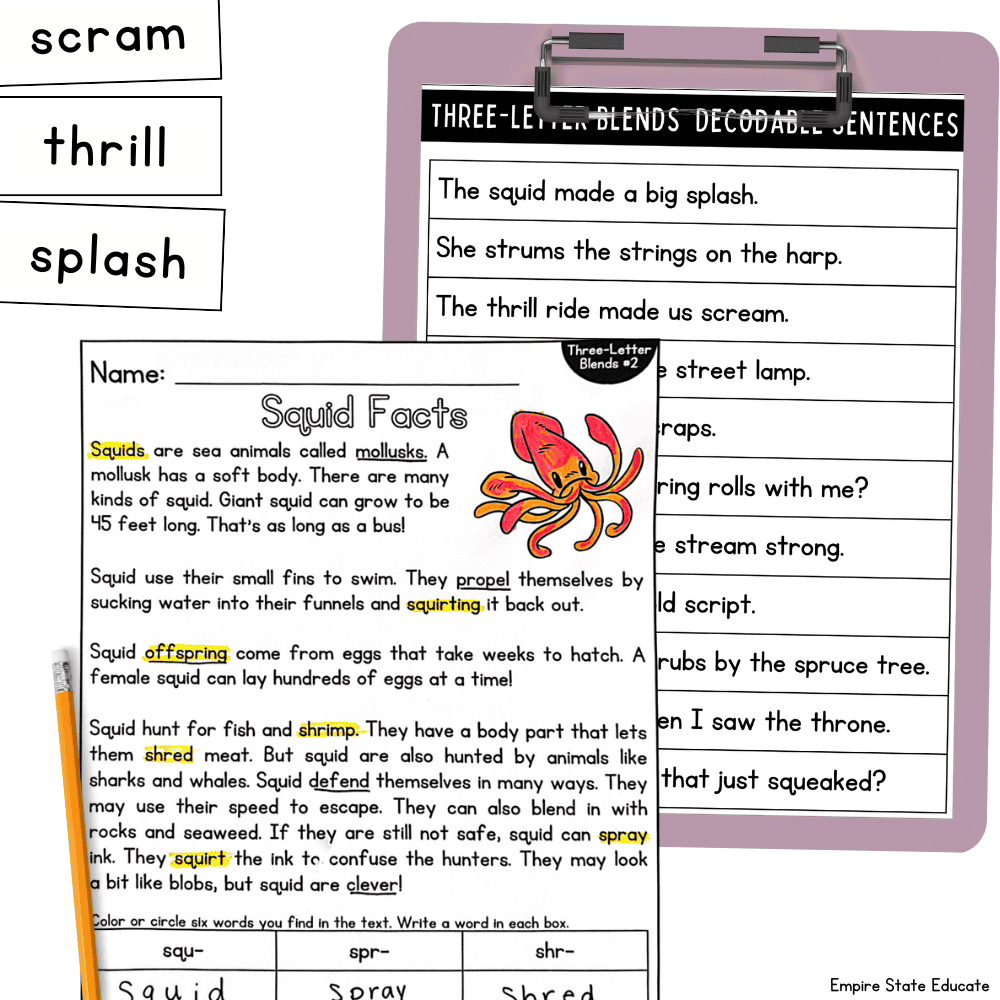
The first part of structured literacy small group lessons is word work. This can include phonics, phonemic awareness, and morphology activities.
For a 15-minute small group lesson, I would recommend spending about 5-8 minutes on word work each day. But this can vary by grade level and student needs! On day one, plan to explicitly teach the skill you are working on. The following days can be review and practice.
It’s important to find a routine that works for your students and stick with it. Don’t try to do new activities every day/week. Staying consistent is easier for you and your students.
My daily “warmup” routine:
- Letter-Sound Drill (1 minute)
- Irregular/HFW Practice (1 minute)
- Blending/Decoding Drill (2 minutes)
Then, I choose one activity that targets phonemic awareness and spelling (encoding):
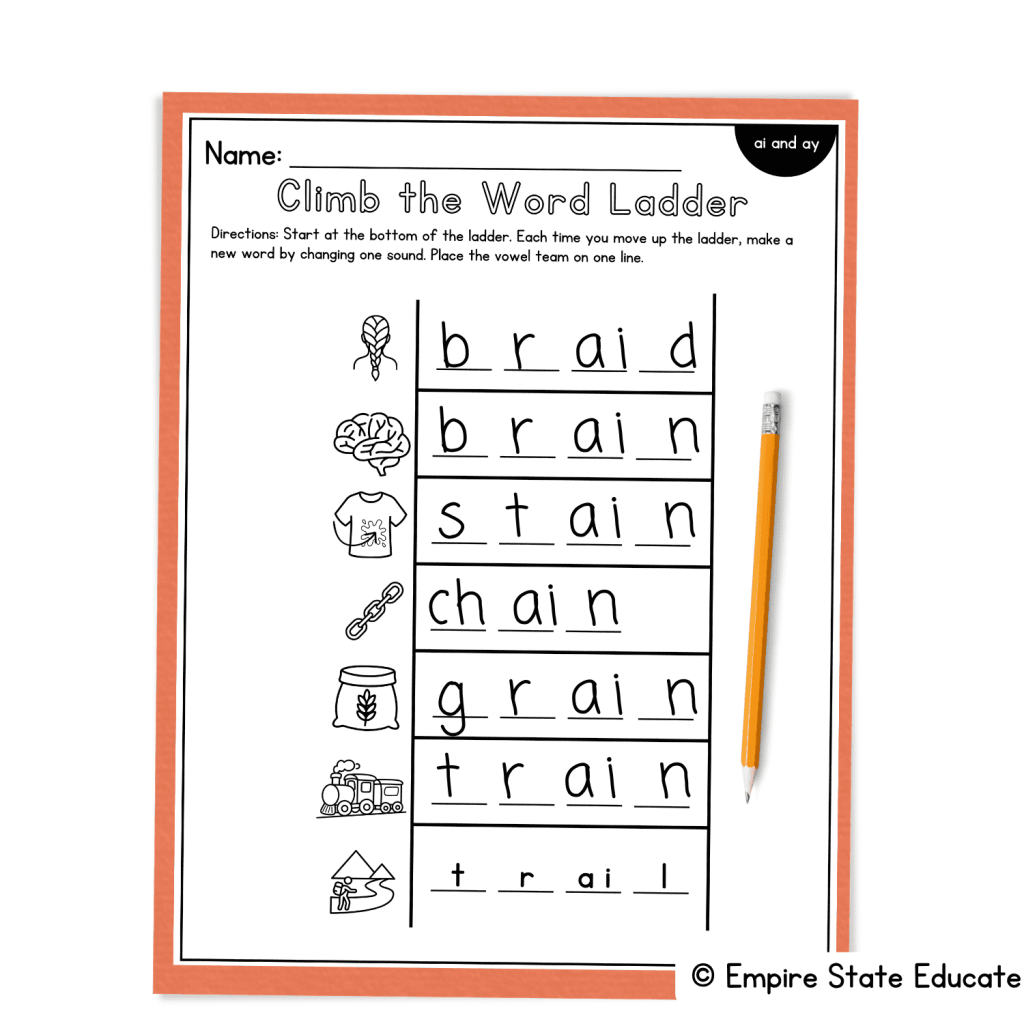
- Word chain/word ladder
- Sound box word mapping
- Word building with magnetic letters
Step 3: Connected Text & Comprehension
The second portion of structured literacy small group lessons (about 7-10 minutes) should be centered around a high-quality connected text. (“Connected text” means words that are linked together as sentences, paragraphs, passages, or stories.) Students need to apply their decoding skills to connected text to build their fluency, accuracy, comprehension skills, and knowledge!
I like to break this portion of the lesson into three parts: before reading, reading, and after reading.
“Before reading” is a quick teacher-directed introduction to the text. The purpose of this is to make sure students have the tools they need to be successful with the reading. This portion of the lesson should only take about two minutes. Here are some example activities:
- Build background knowledge
- Preteach vocabulary
- Model a strategy
- Set the purpose for reading
Then, students get time to apply their skills by reading the connected text. I start the week by having students “whisper read” the text independently. Later, we practice fluency by partner reading, choral reading, or echo reading. You can also flip-flop this depending on the level of support your students need.
Finally, end the lesson with one “after reading” activity to build understanding. I like to keep these simple after our first reading of the text, then go more in-depth after the second or third reading. Here are some examples:

- Discussion question(s)
- Comprehension questions(s)
- Writing activity
- Vocabulary activity
Again, find a routine that works and stick to it. For example, you might have students read on day one, reread on day two, and partner read on day three. You might always start the week with a discussion and end it with a writing activity. I recommend doing at least one writing activity per week, because writing about reading is an important skill that students often don’t get enough practice with.
🚨Be sure to preview the text so you can anticipate tricky spots and choose the best activities.
Step 4: Assessment & Progress Monitoring
The last step to planning structured literacy small group lessons is to choose 1-2 assessments you will use to monitor students’ progress towards their goal. These do not have to be long or complex; they just need to tell you how each student is doing. Here are some examples:
- Do a quick running record on each student as they read
- Give students a spelling quiz at the end of the week
- Do a quick nonsense word decoding check
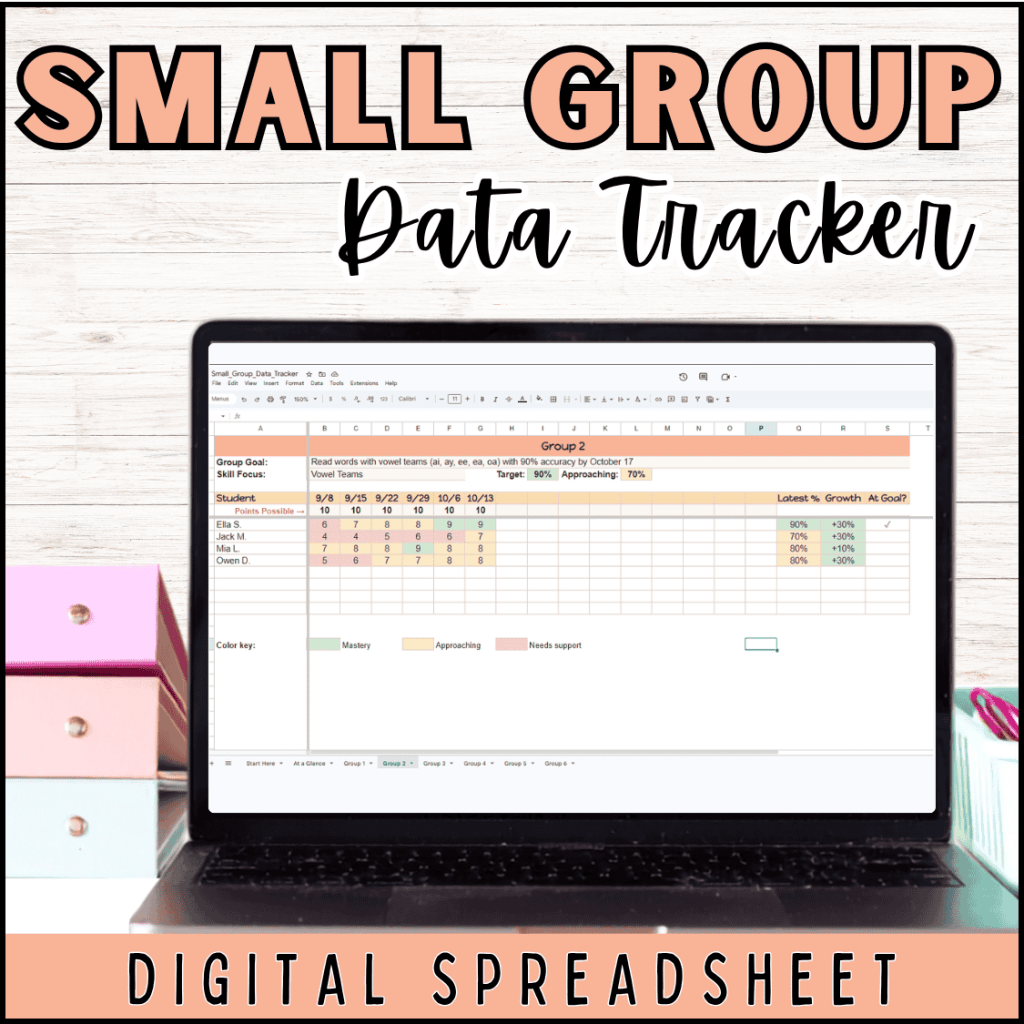
Record students’ assessment scores and keep track of the data. For an easy digital option, check out this small group data tracker in my TPT store. It automatically color codes and calculates growth!
Structured Literacy Small Group Lesson Plan Example
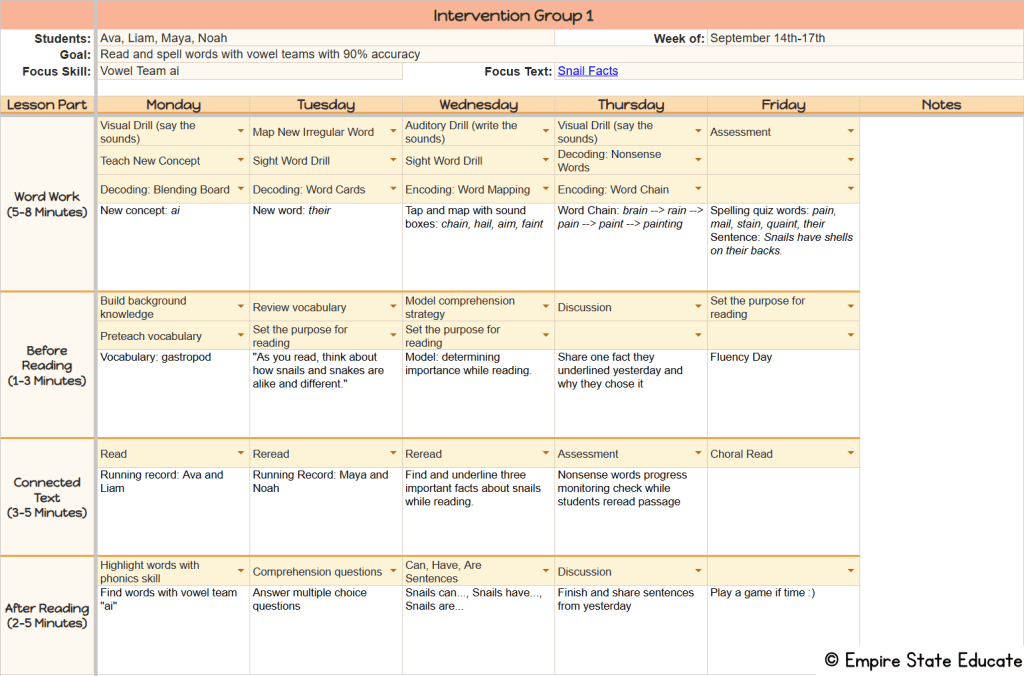
Here’s an example of a five-day structured literacy small group plan for second graders.
Goal: Read and spell words with vowel teams with 90% accuracy.
Skill Focus: Vowel team “ai”
Text: Snail Facts (decodable passage)
Day 1:
- Teach the new phonics skill
- Build background knowledge and preteach vocabulary
- Whisper-read the passage
- Highlight words with the vowel team in the text after reading
Day 2:
- Review the phonics skill, teach a new irregular word
- Review vocabulary & reread the passage
- Answer comprehension questions
Day 3:
- Word mapping with sound boxes
- Model how to determine importance while reading
- Reread the passage and underline important facts
- Write about snails using “can, have, are” sentence stems
Day 4:
- Word chain with letter tiles
- Progress monitoring check while reading
- Finish and share sentences
Day 5:
- Spelling quiz
- Choral read the passage for fluency practice
Structured Literacy Small Groups Lesson Planning Template
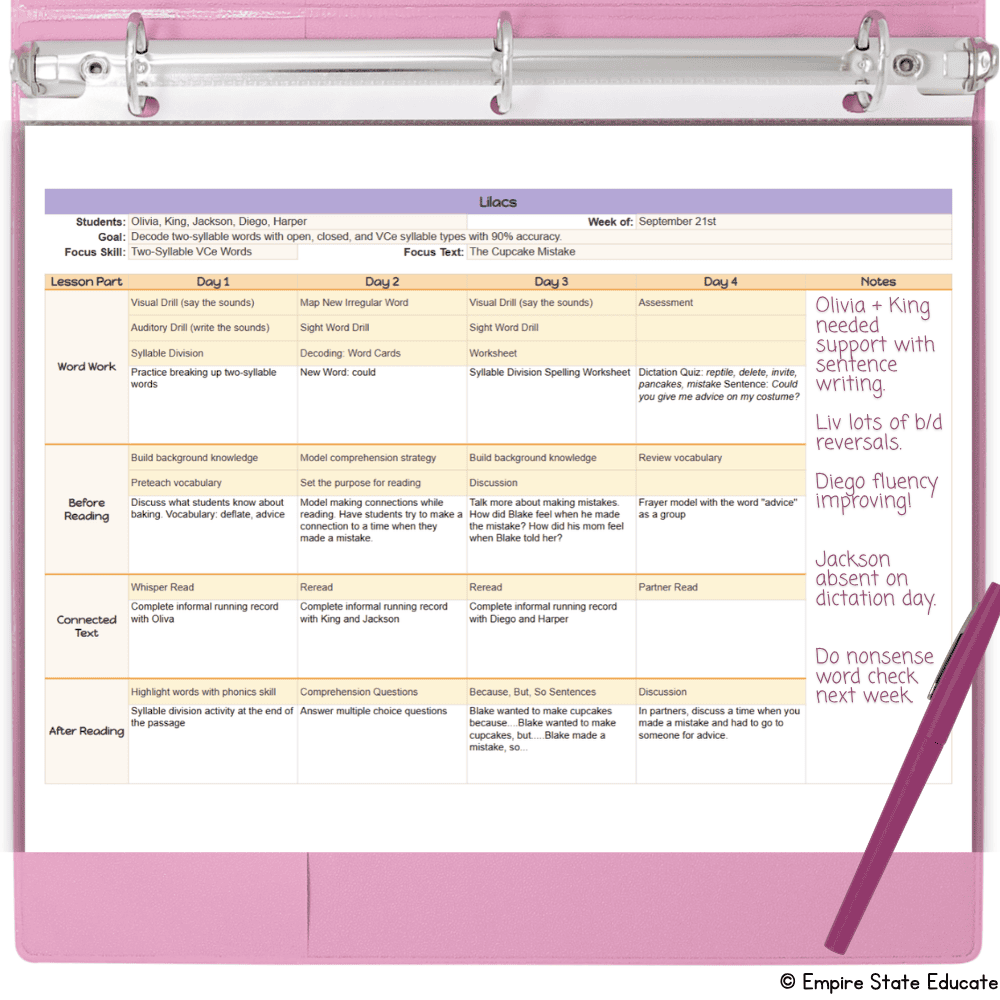
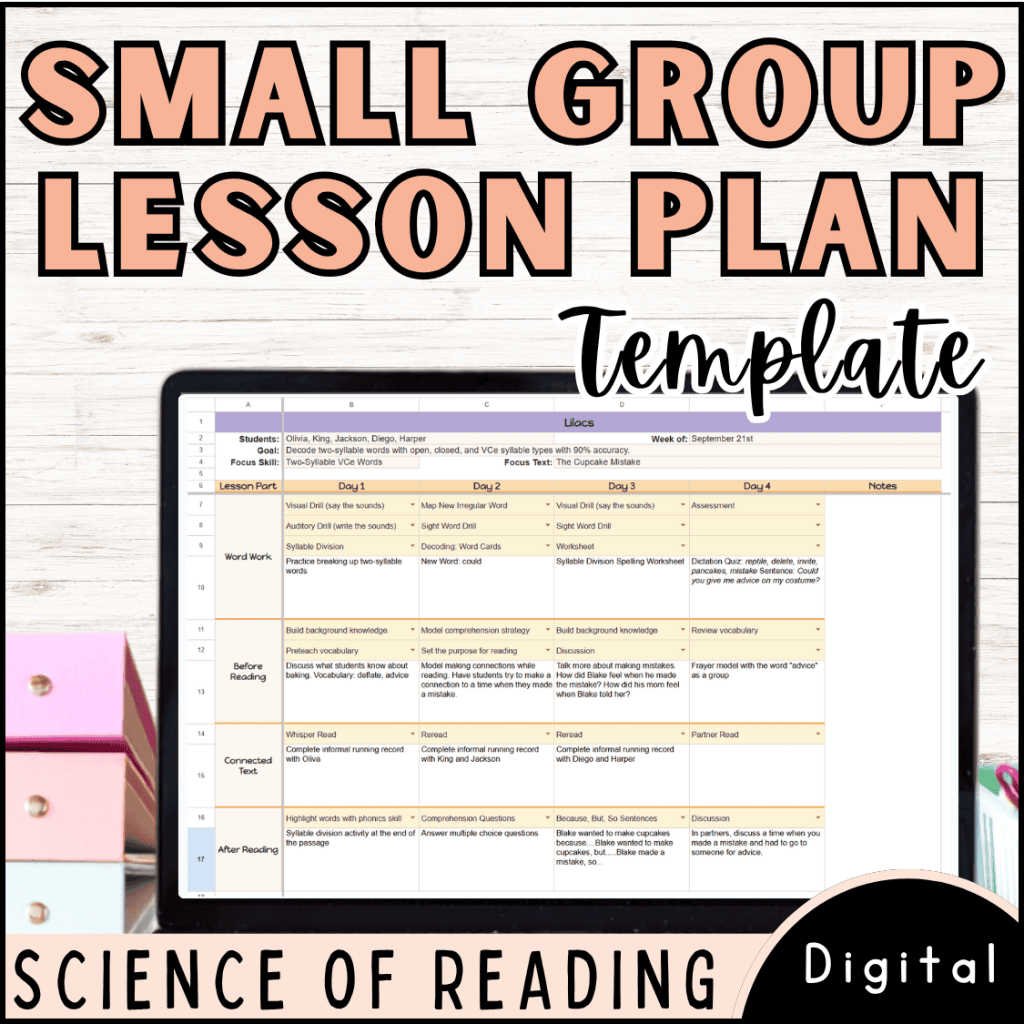
Small group planning used to take me forever, so I created a digital template that makes the process so much faster. With this lesson planning template, you can use dropdown menus to quickly fill in the activities for each day. The activities come from a prefilled activity bank that you can customize!
There are weekly templates for 3, 4, or 5 days of instruction. Each day includes a section for word work, before reading, connected text reading, and after reading – but you can customize those if you’d like. It also includes a section for taking notes throughout the week.
How to use the digital lesson planner:
- Choose your template and duplicate for each small group
- Customize the group names and colors if desired
- Customize the activity bank if desired
- Type in the goal, skill focus, and text
- Use the dropdowns to select activities for each section
- Type in specific details and materials if needed
Then, you can print the lesson plan and use it to record anecdotal notes throughout the week. When you’re ready to plan a new week, you can simply duplicate the lesson and switch out anything that needs to be updated. Once you get a routine nailed down, you can truly plan small groups in minutes!
Structured Literacy Small Group Resources (Quick Links)
More small group blog posts:
More small group resources:
Small Group Data Tracker and Lesson Planner:
Pin This Post for Later